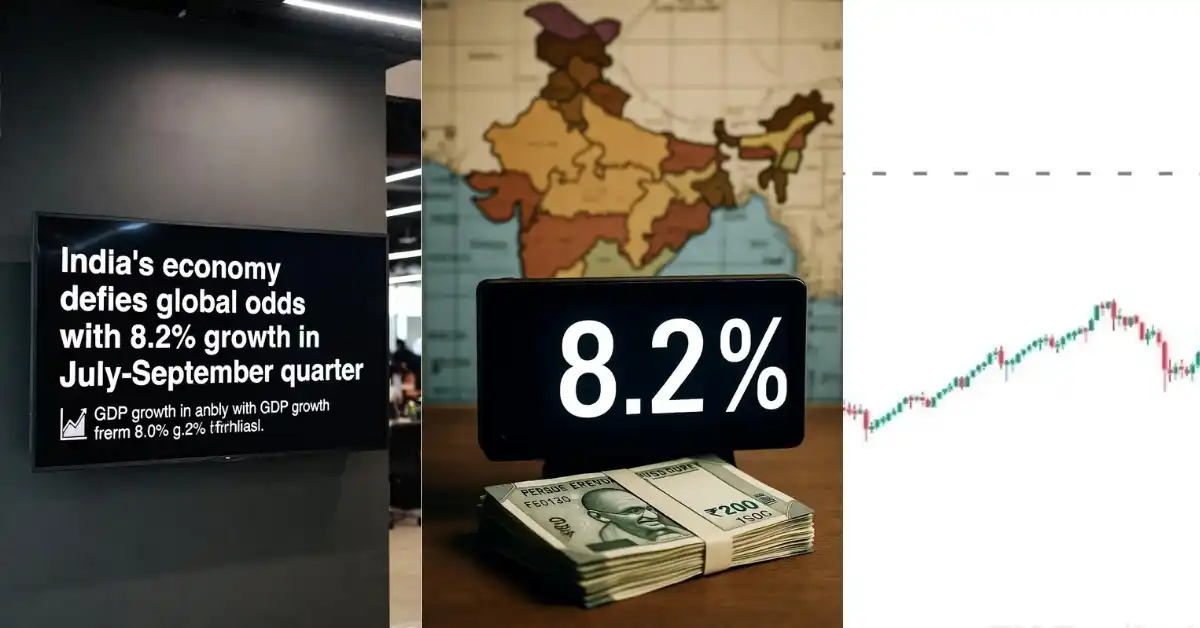
In a stunning display of resilience, the Indian economy clocked its fastest growth in six quarters, with GDP expanding by 8.2% in July-September 2025. This robust performance, fueled by a strong rebound in private consumption and manufacturing, comes amid a challenging global environment of US tariff pressures and sluggish private investment.
The latest data from the National Statistical Office (NSO) shows the economy significantly accelerated from the 5.6% growth recorded in the same quarter last year and the 7.8% growth in the preceding April-June quarter. This growth surge has also comfortably surpassed the Reserve Bank of India’s (RBI) upgraded full-year projection of 6.8% for FY26.
The Consumption Engine Roars Back to Life
The most significant driver of this growth story is the powerful comeback of the Indian consumer. Accounting for nearly 60% of the entire economy, private consumption expenditure saw its growth rate jump to 7.9% in Q2, up from 6.4% in the previous quarter.
This translates to the collective spending of millions of Indians on everything from new smartphones and vehicle EMIs to school fees and daily groceries. After a period of relative caution last year, households have opened their wallets wider, providing the single biggest thrust to the economic engine.
Manufacturing and Government Spending Provide Thrust
Beyond consumption, two other critical sectors provided a major boost.
- Manufacturing Surge: The manufacturing sector grew at an impressive 9.1% during the quarter, a dramatic acceleration from the 2.2% growth seen a year ago. This indicates a strong rebound in industrial activity and production.
- Government Expenditure: Continued government spending on infrastructure and public services provided a stable foundation for growth, helping to offset areas where private investment has been slower to recover.
How India Weathered the Global Tariff Storm
The strong GDP print is particularly notable as it comes at a time of significant global trade tensions. The US administration had imposed tariffs on several countries, creating headwinds for global commerce .
However, the impact on India has been contained. Official sources indicated that despite the tariffs, demand for Indian goods in the US has, in fact, increased in some sectors, with the Indian economy showing little negative impact on its GDP from the US tariff measures . This resilience has been attributed to a strategic diversification of export markets and the massive size of India’s own domestic market, which insulates it from external shocks.
The Bigger Picture: What This GDP Number Means
The 8.2% growth figure is more than just a statistical highlight; it is a strong signal of the economy’s underlying health. The GDP (Gross Domestic Product) is the broadest measure of a nation’s economic health, representing the total value of all goods and services produced within its borders in a specific time.
This stellar performance in the second quarter sets a positive tone for the rest of the financial year. With the full impact of recent GST rate cuts yet to feed through into the system, the economic momentum appears to be on a firm footing, giving policymakers and businesses renewed confidence in India’s growth trajectory.
The Road Ahead
All eyes will now be on the upcoming monetary policy reviews and the government’s strategy to sustain this high growth phase.The rebound in private consumption is a vital sign of returning economic confidence at the grassroots level, suggesting that the Indian growth story, backed by its domestic market and policy initiatives, continues to hold strong in a volatile global landscape.