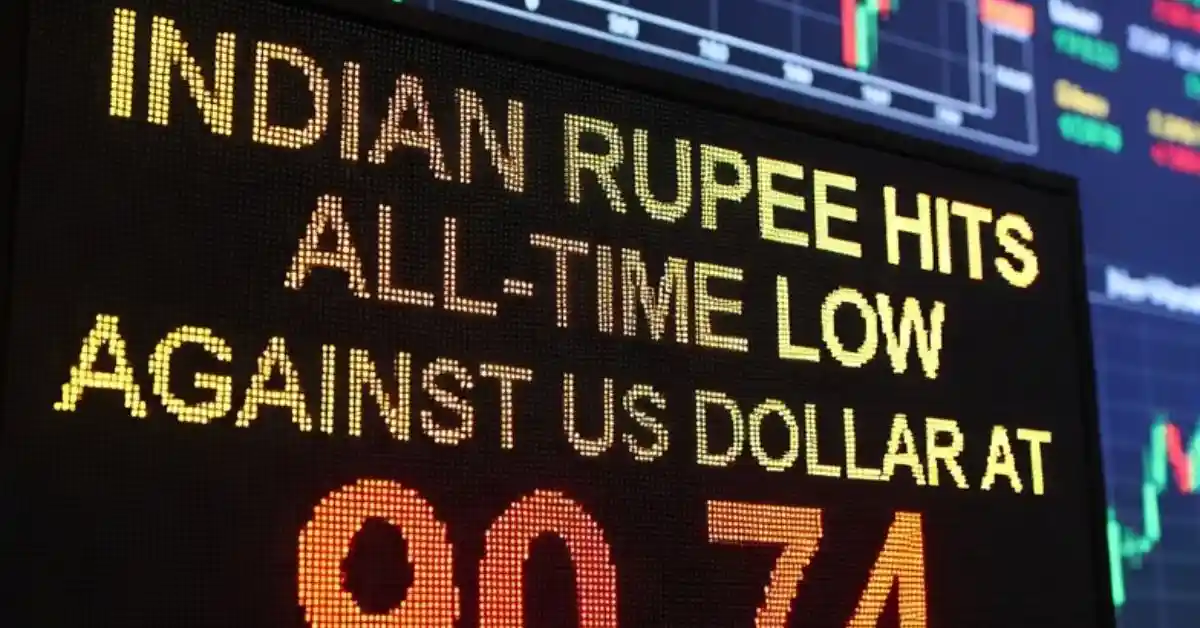
The Indian rupee has plunged to a fresh record low.
On December 15, 2025, the Indian rupee hits all-time low of 90.74 against the US dollar, marking another tough day for the currency amid lingering uncertainties.
Mumbai’s currency markets saw steady pressure on the rupee right from the morning trade. Traders say the unit opened weak and kept sliding as dollar demand from importers rose, while foreign funds continued to exit Indian stocks and bonds. By close, it settled at 90.74, down about 25 paise from the previous day. This comes just days after it first breached the 90 mark earlier in the month.
Why the Indian Rupee Hits All-Time Low This Time
Several factors are weighing heavily on the rupee these days. The biggest one is the ongoing uncertainty over a trade deal with the United States. Talks have dragged on without a clear breakthrough, and steep US tariffs of up to 50% on many Indian goods—imposed earlier this year—are hurting exports badly. These duties, linked partly to India’s energy imports and reciprocal trade issues, have made Indian products less competitive in the American market.
Add to that, foreign institutional investors (FIIs) have pulled out over $18 billion from Indian equities in 2025 so far. This massive outflow has increased dollar demand as investors convert rupees back to dollars. Market experts point out that since July, FII selling has crossed ₹1.55 lakh crore in some estimates, driven by worries over US trade policies and better returns elsewhere.
Another pressure point is the rising import bill. High global prices for commodities like oil and metals mean more dollars going out. Importers, including oil and gold companies, are also hedging by stocking up on dollars amid the uncertainty, further pushing the rupee down.
Impact on Imports and Everyday Life
A weaker rupee means imports become costlier for India. Anything from electronics and machinery to crude oil now requires more rupees to buy the same amount of dollars. This can push up inflation over time, especially for fuel and consumer goods.
For ordinary people, it hits the wallet directly. Studying abroad or travelling overseas has become much more expensive. Take an example: earlier this year, when the rupee was around 85-86 to the dollar, sending a child to the US for education cost less in rupees. Now, at over 90, the same fees, living expenses, and travel eat up a bigger chunk of savings.
Businesses reliant on imported raw materials are feeling the pinch too, which could eventually reflect in higher prices for end consumers.
RBI’s Role and Limited Intervention
The Reserve Bank of India (RBI) has been watching closely but intervening less aggressively this time. Sources in the market say the central bank steps in mainly to prevent sharp swings rather than defend a specific level. This approach has allowed the rupee to find its market-driven value, though it has led to faster depreciation in recent weeks.
Analysts like those from LKP Securities note that without heavy RBI dollar sales, the fall has accelerated. The central bank did announce measures earlier this month, including liquidity injections and forex swaps, but direct spot interventions have been measured.
How Currency Value is Determined
In simple terms, a currency like the rupee weakens when there’s more demand for dollars than supply. India’s foreign exchange reserves play a key role—they help in international payments and can support the rupee if needed. When reserves are used to sell dollars, it can stabilise the currency. But persistent outflows and trade imbalances make it tough to hold the line forever.
The rupee’s nearly 6% drop in 2025—from around 85.70 at the start of the year—shows how external factors like global dollar strength and trade tensions can override domestic positives.
Stay updated with the latest on currency movements and economic news—markets can shift quickly based on any fresh developments in trade talks or global cues.
Disclaimer: This article is for informational purposes only and does not constitute financial advice. Currency markets are volatile, and readers should consult professionals for investment decisions. Data and views are based on market sources as of December 15, 2025.